





Would you look at that. The fox not only is guarding the College Football Playoff henhouse, he has subcontracted out the job.
Hey, what’s one vote among financially interested friends?
My god, what is going on here?
First, the particulars: On3 reported Wednesday that a former CFP selection committee member and Bowl Subdivision athletic director had an employee at their school prepare them with a top 25 before they walked into the weekly vote.
On3 didn’t name the athletic director, but CFP executive director Rich Clark says it’s all copacetic. Or at the very least, there’s no rule against it.
There are two problematic issues at play here: affecting the voting process, and significantly more important, the integrity of the entire system — or what must be addressed this offseason.
No more athletic directors with steep financial interest in the multibillion dollar CFP on the selection committee. No more connection to athletic departments, or any whiff of tangental improprieties.
Want to gain complete trust in the process? Use former players and disinterested parties.
A combination of former players and media members, but not with the current cloak of secrecy. Every vote is public, every metric is, too.
There’s nothing left to the imagination. Or in this case, an athletic director and his employee.
DABO'S DAYS: Dabo Swinney era at Clemson nearing predictable, painful end
HOOSIER HYPE: Curt Cignetti fires back at Indiana schedule critics. He's using blanks
The surest, fastest way to torpedo the new 24-team CFP beginning in 2027 — and college football as a wildly successful entity — is to lose public faith and trust. It’s bad enough that the current clown show looks like a weekly advertisement for the SEC.
It’s worse that we now know one (or more) of the 23 sitting athletic directors to serve on the selection committee since its inception in 2014 didn’t do their homework. Didn’t watch games, didn’t prepare, didn’t research — and then voted in the poll.
If you think he or she is the only athletic director or committee member to do such a thing, I’m the Big Ten and I’ve got an Alliance to sell you.
What exactly did everyone think would happen? We’re asking athletic directors with the intense, pressure-packed job of running athletic departments with annual budgets reaching well into the $200 million range, to take three days off every week and focus on watching football games.
Anywhere from 20-40 games a weekend, and then pouring over mountains of metrics data to come up with a Top 25 baseline poll. Then spending hours comparing teams and revoting, and repeating the process until a consensus Top 25 is reached.
All while the elephant sits squarely in the room: each of these athletic directors, in one way or another, has a financial interest in how the Top 25 unfolds. The more teams from their respective conferences selected, the more CFP money those conferences receive to share with other member schools.
We have to take a long look at how we’re running this selection committee, or as Texas coach Steve Sarkisian told me earlier this spring, “The committee does’t have the bandwidth to watch that many games. They see the media and coaches polls, and they copy them.”
That, or use the work of someone else — and give every coach in college football reason to distrust them.
This is no way to run a multibillion dollar business, folks. It’s bad enough that voters aren’t doing the work, and it’s just as integrity-draining when the CFP selection committee refuses to explain the metrics used in the voting process.
From Day 1 of the first poll in 2014, the metrics used — and how the selection committee can apply them to specific situations — should have been indisputably transparent. Everyone knows the rules of the game, everyone knows how the rules are applied.
There’s no misunderstanding, no conspiracy.
Instead we get Indiana and Alabama in near identical situations one week apart, and one team is impacted by losses from its opponents, and one is not. One takes a significant drop in the poll, and one does not.
I’ll give you three guess who wasn’t impacted, and the first two don’t count. It rhymes with Schmalabama.
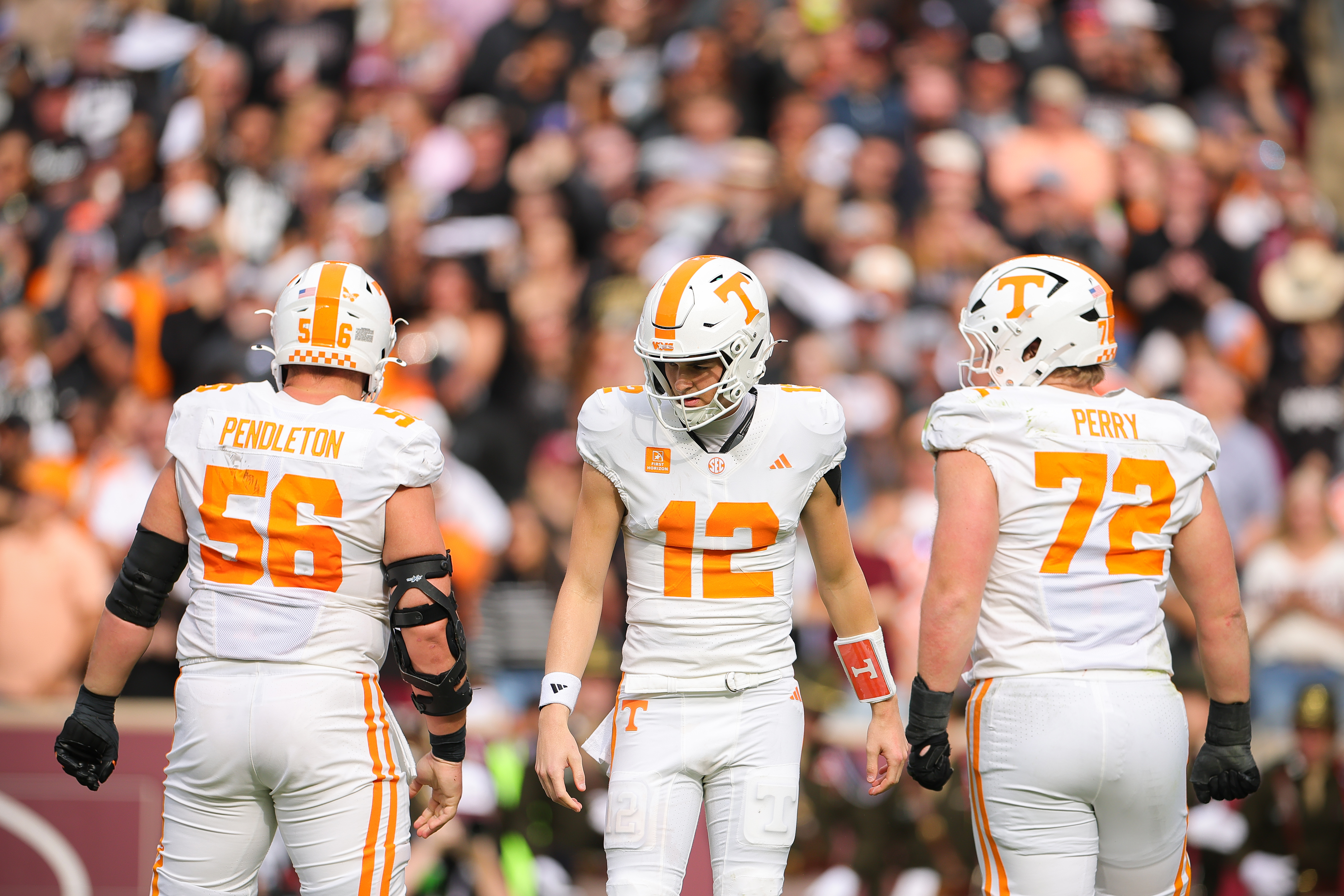
Or we get Tennessee beating Alabama by 16 points, with a near identical schedule and the same number of losses, and still sitting five places behind the Tide.
Or we get Arizona losing at home to Utah, and the Wildcats moving up four spots — because, I don’t know, maybe Utah, BYU, Texas Tech and the Big 12 needed Arizona in the Top 20 to strengthen their resumes. And eventually, their wallets.
The days of any publicity is good publicity for college football are long gone. There’s too much money invested in the sport, in coaches and players, to ignore public uncertainty. The goal isn’t an extension to the sport of arguing, it’s leaving no doubt to CFP poll machinations.
Complete transparency on every level.
Instead of the financially interested looking out for themselves.
Matt Hayes is the senior national college football writer for USA TODAY Sports Network. Follow him on X at @MattHayesCFB. Listen to him daily, from 12-2 p.m., on 1010XL-Jacksonville.
This article originally appeared on USA TODAY: Time for CFP selection process to change to erase integrity doubts | Opinion
Source: Yahoo Sports



Sign in to join the conversation.
Comments, replies, Roars, reports, and followed-thread notifications use your verified Rally & Roar account.
Sign in or create an account