
Iron Bowl week is upon us, the most provocative, intoxicating, treacherous week of the year in the state of Alabama. As is so often the case in the Yellowhammer State, Auburn fans are smirking with anticipation, and Alabama fans are clinching up with dread. Only one of these two programs has a hope of making the College Football Playoff … but then again, only one of these two is playing with house money, too.
Alabama is a fascinating case study in the quirks, inconsistencies and blind spots of the College Football Playoff. Are the Tide a good team with occasional off nights, or a mediocre team that exploited bad opponents before we knew how bad they really are? Who’s to say?
Auburn, well … Auburn is just here to ruin Alabama’s year.
Alabama has enjoyed favored-nation status in the world of college football for the last two decades. How you feel about that probably depends on whether you know the proper refrains to “Dixieland Delight.” To Alabama fans, the Tide deserves all the attention and acclaim that comes its way; that’s what happens when every other program defines itself in opposition to you. To Alabama haters, the Tide’s continual presence in the upper reaches of polls — like the current CFP one, where they are ranked third — despite objective evidence to the contrary is proof that Alabama still gets undeserved special treatment.
Both sides are correct, of course. Alabama has put up some notable performances this season, beating Kentucky, South Carolina, LSU and Mississippi State, all of whom were ranked at one point or another, and coming within three points and a dubious officiating call of beating Georgia. On the other hand, Tennessee dog-walked Alabama, and the Tide’s lofty CFP ranking seems way out of whack for the actual on-field skill exhibited, no matter what rationalizations the CFP committee trots out.
“Quite honestly, when we watch them on film, when we watch their games, we really feel like they're one of the best three or four teams in the country,” CFP committee chair Hunter Yurachek said of Alabama last week.
The problem for 2026 Alabama is that it’s not 2020 Alabama or 2017 Alabama or 2012 Alabama or … you get the idea. More rounds of playoffs mean more opportunities for Alabama itself to fall short … but also, more opportunities for the Tide’s allegedly fearsome opponents to wither. Consider: all four of those once-ranked opponents whom Alabama beat are now in the land of “Also receiving votes” or beyond. And the two teams that beat Alabama are on a path to Atlanta for the final SEC championship.
“I feel like we're more complete as a football team and able to play anybody, anytime, anywhere,” Alabama head coach Kalen DeBoer said last week. “But you got to go do it.”
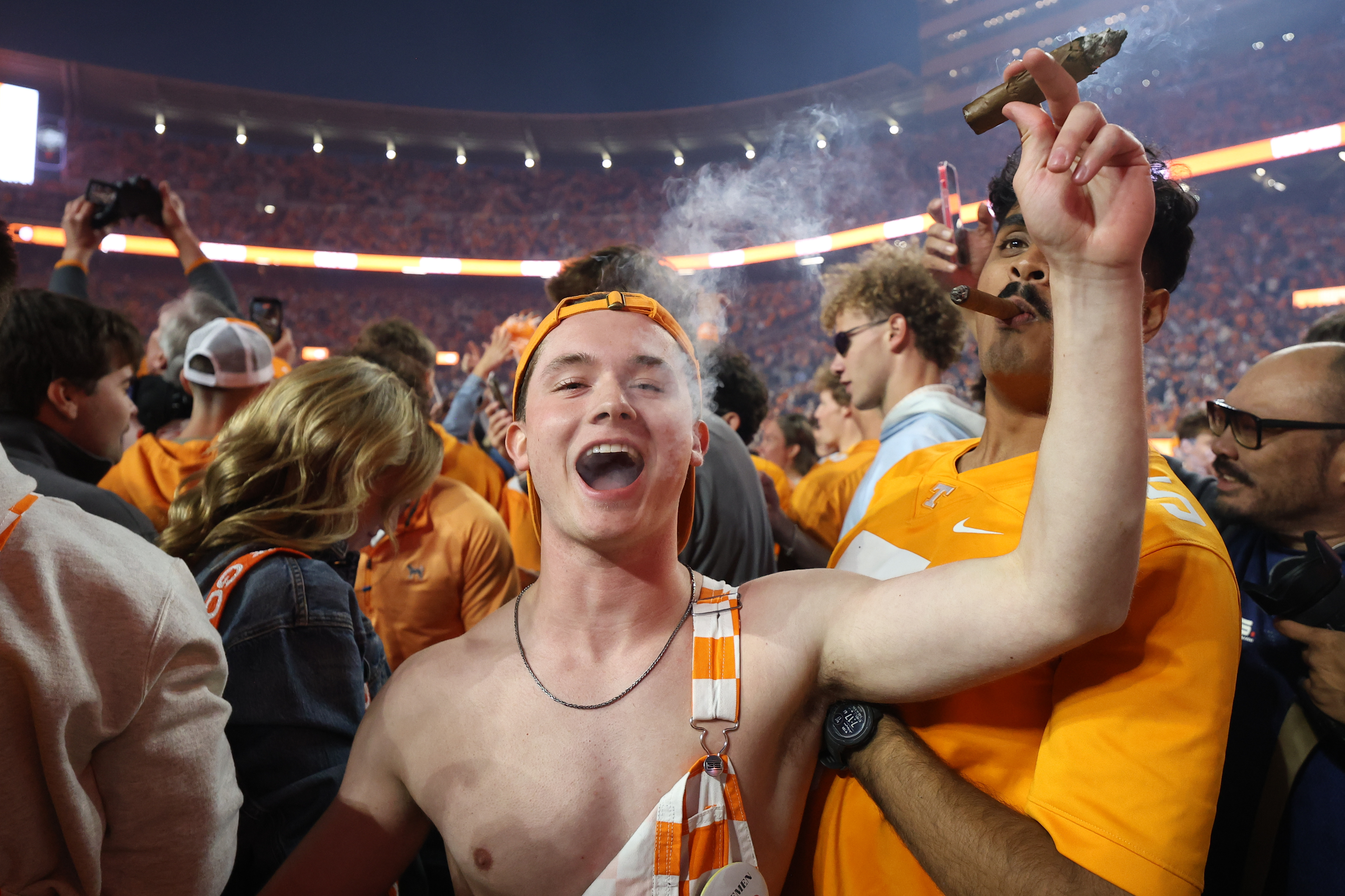
Alabama’s lofty CFP ranking gave it plenty of margin for error over the final few games of the season. The combination of a high ranking and the faltering of most teams below it almost certainly means Alabama will still be in the discussion for a playoff berth regardless of what happens on Saturday in Tuscaloosa against Auburn.
Which is a good thing, because if history is any guide, Auburn lives to make Alabama’s life miserable on the Saturday after Thanksgiving. And we’re on a trajectory for that to happen again this year.
Auburn and Alabama have met 90 times, and while Alabama holds the overall edge, 52-37-1, Auburn owns the bumper-sticker angle. Virtually all of the most memorable games — Punt Bama Punt, Bo Over The Top, The Camback, and of course Kick Six — have gone Auburn’s way. That’s because Auburn is an agent of chaos, unpredictable in the best of times, actively destructive in the worst ones.
This year, Auburn is rolling into the game knowing they’ve already knocked off a highly ranked opponent on the road. That’s some dangerous confidence.
“Challenge for our guys is to be the most prepared team in the country,” Auburn head coach Alex Golesh said earlier this week. “The ability to go finish is a huge, huge part of getting to the end of the season and finishing it the right way. Winning in November, finishing in November, and certainly this Iron Bowl game is a huge, huge deal to us.”
It’s to the playoff’s eternal detriment — and next year will be even worse — that such games like the Iron Bowl no longer carry the season-wrecking weight they once did. Matter of fact, you can point to one specific Iron Bowl — 2017 — as the focal point for everything that’s sideways between the playoffs and rivalry games in general. Back in 2017, then-No. 6 Auburn beat then-No. 1 Alabama 26-14. But Alabama still made it into the playoffs as the No. 4 seed, and then went on to beat Georgia for the national title in the famous 2nd-and-26 game.
The Iron Bowl still matters in Alabama; fans of the winning team will lord Saturday’s result over their friends, neighbors and co-workers for the next 364 days. For Auburn, it’s an opportunity for Golesh to establish his tenure as the most promising since the early 2010s. For Alabama, there’s no upside, only a set of expected-to-devastating potential outcomes.
The Tide know the ground is unsteady beneath them, both this season and in the future. Brand-name loyalty doesn’t mean much when Indiana is winning national championships. Brand names like Ohio State, LSU and Clemson are on a downswing, and as Auburn’s victory over Georgia showed, the Tigers are on the way up. How will Alabama respond to this opportunity? We’ll find out starting on Saturday night in Tuscaloosa.
Source: Yahoo Sports


Sign in to join the conversation.
Comments, replies, Roars, reports, and followed-thread notifications use your verified Rally & Roar account.
Sign in or create an account