





Week 5 in the Big 12 could best be described as eye-opening and eventful.
There were six conference matchups, while Kansas feasted on Middle Tennessee in the lone non-conference clash. Houston erased a 17-0 deficit against UCF over the final 19 minutes. Iowa State and West Virginia provided one of the most thrilling offensive shootouts of the season. BYU preserved its top-10 ranking after eking out a defensive-driven win in Fort Worth. Texas Tech endured another slow start before pulling away from Colorado. Baylor emptied out the Tempe crowd by obliterating Arizona State. And Arizona decisively ruined Cincinnati’s perfect season in the nightcap.
Here is the full scoreboard from Week 5:
- Houston 27, UCF 17
- Kansas 55, Middle Tennessee 0
- Iowa State 45, West Virginia 42
- BYU 17, TCU 10
- Texas Tech 29, Colorado 7
- Baylor 55, Arizona State 19
- Arizona 34, Cincinnati 7
And here are five takeaways from Week 5 in the Big 12:
Baylor is this year’s surprise team

Baylor is one of the most volatile programs in college football. Every year since 2015, the Bears have increased or decreased their win total by at least three. Over the past 10 years alone, Baylor has won three games or fewer three times but also won at least 11 twice and competed in two Big 12 Championship Games.
This year, it appears we have the good version of Baylor.
The Bears collected their fourth consecutive victory Saturday night, completing obliterating Arizona State two time zones away from home in a 55-19 rout. DJ Lagway, who missed Weeks 2 and 3 due to injury, won Big 12 Offensive Player of the Week honors for a dominant 306-yard, 4-touchdown performance without throwing an interception. Meanwhile, the rushing attack added 244 yards and three touchdowns, showcasing just how dynamic this offense can be under Jake Spavital.
Nobody questioned Baylor’s offensive abilities during last year’s 5-7 team, but the defense was ultimately what denied the Bears from bowl eligibility. First-year defensive coordinator Joe Klanderman has seemingly fixed those woes. Arizona State struggled mightily against Baylor’s front, and that’s been a theme for virtually every opponent Klanderman has faced. The Bears now boast the fourth-most sacks in the FBS with 18, when last year, they ranked third-to-last with 12. Their run defense has undergone a similar dramatic transformation, skyrocketing from 122nd nationally in yards allowed per game to 22nd, while reducing opponents’ rushing average from 4.91 yards per carry to 2.88.
Baylor is inches away from a 5-0 record, as Matthew Klopfenstein was tackled just short of the goal line on the deciding two-point attempt in Week 1 against Auburn. Dave Aranda’s team remains perfect in Big 12 play with a manageable stretch of TCU, Kansas, UCF, and Iowa State looming.
Every year, the Big 12 has a surprise team — 2023 West Virginia, 2024 Arizona State, 2025 Houston. This year, Baylor fits the mold.
Aiden Flora is a one-man wrecking crew

Iowa State faced one of the toughest rebuilds in college football this offseason. Head coach Matt Campbell departed for Penn State and took several assistants and 24 players with him. As a result, the Cyclones were one of two FBS teams, along with North Texas, to return zero starters from 2025.
Every offensive starter on this 2026 Iowa State squad is a transfer, except for one incumbent who spent last season as a reserve. That lone holdover has made all the difference.
Aiden Flora enjoyed one of the best individual performances we’ll see all season in the Cyclones’ 45-42 win over West Virginia. The running back posted 212 rushing yards and three touchdowns on 22 attempts while also delivering 48 yards and two touchdowns as a passer on trick plays.
Whenever Flora was involved, big plays followed. He threw a 46-yard touchdown to Cody Jackson and ran in touchdowns of 24 and 63 yards in the second half. When Iowa State needed to punch in the game-winning score with under two minutes remaining, it was no surprise Flora’s number was called.
This all-around masterclass wasn’t a one-off performance. Two weeks earlier against Bowling Green, Flora accounted for 194 rushing yards, 10 receiving yards, and 92 punt return yards for 296 all-purpose yards, while scoring two touchdowns as a runner and another as a punt returner.
He’s a ball carrier. He’s a pass catcher. He’s a return specialist. And apparently, he’s a star quarterback too. Flora has become the ultimate spark of this retooled Iowa State team, and he’s been the most versatile player in the country this season.
Arizona has a terrifying run defense

Nobody had an answer for Cincinnati’s offensive line during the month of September. The Bearcats ranked seventh nationally in both rushing yards per game and yards per carry. In the Big 12 opener, a typically stout Kansas State front had no answer for Cincinnati in the trenches, surrendering 271 rushing yards and three touchdowns on a 7.1 average.
Arizona provided the perfect counter. The Wildcats limited the Bearcats to 74 yards rushing on 28 attempts. One week after Cincinnati produced two 120-yard running backs, Arizona prevented a single Bearcat tailback from gaining more than eight yards on a carry. The star duo of Gi’Bran Payne and Cole Tabb combined for just 43 rushing yards Saturday night in Tucson.
In 2025, Arizona was renowned for a dominant passing defense that produced three NFL Draft selections from its secondary. This year, the Wildcats are overwhelming opposing offensive lines and regularly stuffing running backs at the line of scrimmage, in an effort spearheaded by linebackers Taye Brown, Cooper Blomstrom, and Chase Kennedy. Arizona currently ranks 11th nationally in run defense, allowing just 79 yards per game. We’ll see whether that trend persists when star running backs Cam Cook and Aiden Flora appear on the schedule later this month. But through five weeks, Arizona has established itself as one of the Big 12’s most formidable fronts.
Texas Tech’s early offense is a major concern

Texas Tech is 5-0, ranked No. 11, and has won four games by double-digits. On the surface, the Red Raiders are enjoying a spectacular start to 2026.
But Texas Tech hasn’t looked like the same dominant force it was last year, when it won 12 games by at least 22 points. The Red Raiders’ Achilles heel has been first quarters.
In four games against FBS competition, Texas Tech has been outscored 17-10 in the opening quarter. The Red Raiders were shut out in the first 15 minutes by Houston and Oregon State and were limited to a field goal Saturday at Colorado. Most of their first-quarter possessions in those games have ended in punts, as Texas Tech has struggled to establish the run early while the passing game has experienced inefficiencies.
If not for consistently strong defensive performances, those slow starts could have tripped up the Red Raiders. Texas Tech has outscored their four FBS opponents 89-26 after halftime, but the defense deserves much of the credit for the 26-0 second half advantage against Colorado. Of those 26 points, 19 came on short fields after interceptions, including a rare 0-yard pick-six by John Curry. The other touchdown stemmed from another short field when Colorado turned it over on downs at its own 41-yard line.
Texas Tech’s defense is an elite unit. But the continued early offensive struggles have made the 2026 Red Raiders look far more vulnerable than the 2025 iteration that dominated opponents on both sides of the ball from the opening whistle.
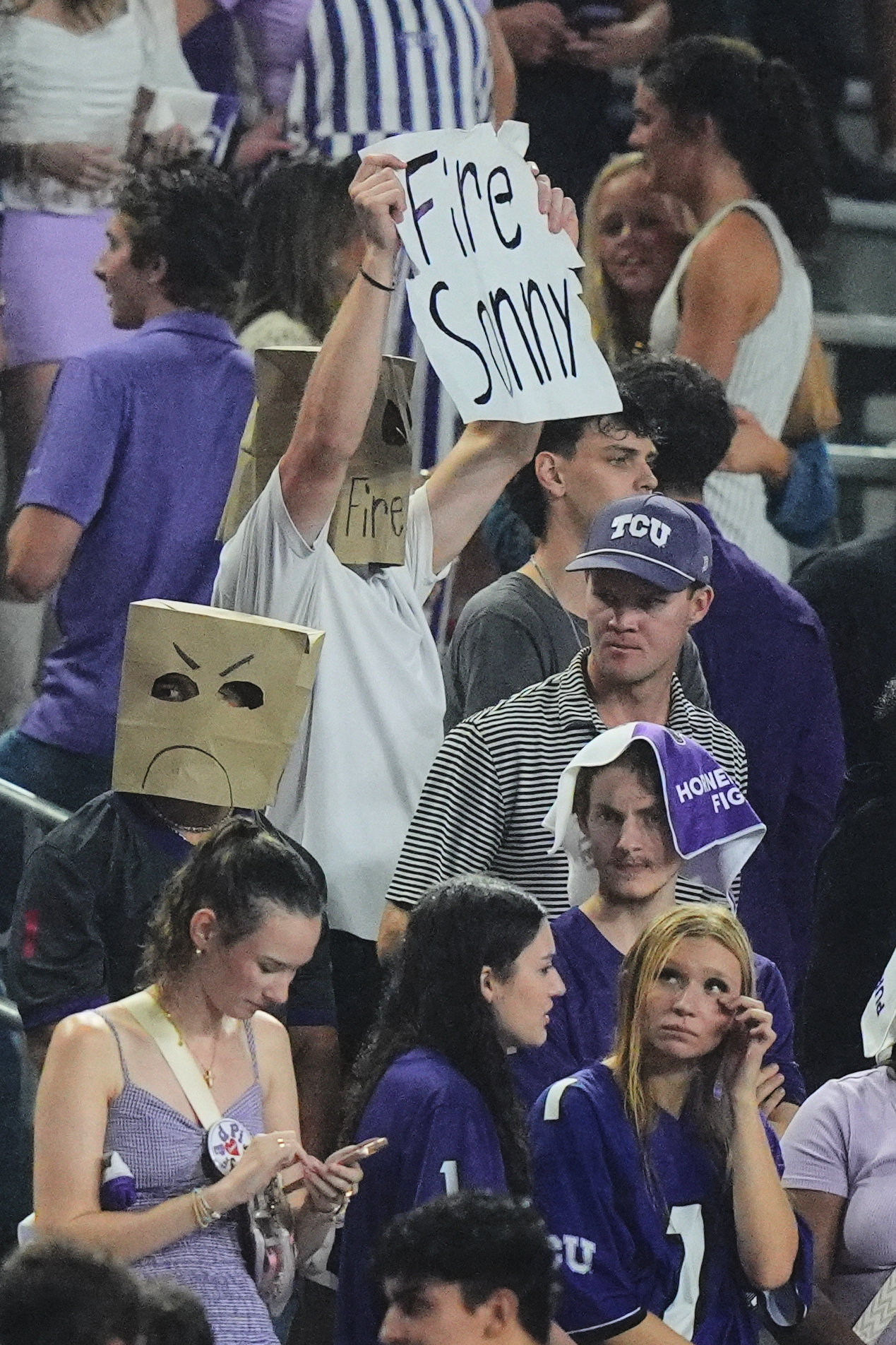
TCU defense has done enough to be 5-0

TCU is 2-3, yet the Horned Frogs haven’t surrendered more than 21 points in a single game all season. That typically is the formula for a winning season, especially at a program with TCU’s track record of offensive success.
Saturday made it clear that TCU has a Big 12 Championship-caliber defense. The Horned Frogs forced now-No. 8 BYU into a slew of difficult situations in a 17-10 defeat. Quarterback Bear Bachmeier completed just 11-of-24 passes for 62 yards, never connecting on a throw longer than 13 yards. The run game was similarly challenged. Star running back LJ Martin suffered an early injury, and no BYU running back exceeded 28 rushing yards against a relentless Horned Frogs’ front.
TCU is tied for 12th nationally in scoring defense at 13.4 points allowed per game. The Horned Frogs are 13th in total defense, 13th in passing defense, and 27th in run defense. They have generated consistent pressure and force more than one takeaway game.
But with minimal help from the offense, TCU is averaging only 16.0 points per game against FBS competition. The offense hasn’t necessarily moved the ball poorly. TCU actually outgained BYU by 43 yards Saturday. But a combination of issues — sacks, penalties, turnovers, and red zone inefficiencies — continue to pile up and prevent this elite defense from getting the support it deserves.
At 2-3, TCU’s record doesn’t remotely reflect the caliber of its defense. If the offense can find even a moderate level of consistency, the Horned Frogs have the foundation to turn their season around and secure a fourth winning campaign in five years under Sonny Dykes.
Check out more Big 12 coverage from our sister SB Nation Big 12 sites:
AZ Desert Swarm (Arizona), Vanquish the Foe (BYU), Wide Right & Natty Lite (Iowa State), Rock Chalk Talk (Kansas), Bring on the Cats (Kansas State), Frogs O’ War (TCU), The Smoking Musket (West Virginia)
Source: Yahoo Sports


Sign in to join the conversation.
Comments, replies, Roars, reports, and followed-thread notifications use your verified Rally & Roar account.
Sign in or create an account